


 |
15 Sep 2026 | 17.15
|
15 Sep 2026 | 17.15






 La Liga


 PUBLICIDAD
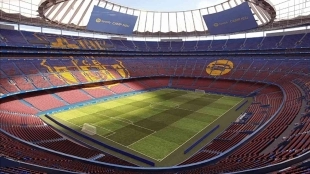
Camp Nou will host the 2029 Champions League final, an official decision by UEFA that also opens a new revenue stream for FC Barcelona's transfer market centered around the stadium's exploitation. The event will take place on June 2, 2029, although the European body has not yet disclosed the direct financial benefits for the club.
Camp Nou enhances Barcelona's economic project
UEFA's choice comes at a time when Barcelona is increasing its income thanks to the return to Camp Nou. The club concluded the 2025/26 season with €1.060 billion in ordinary revenue, a record attributed by the entity to the progressive recovery of activity in the stadium.
For the 2026/27 season, Barça's accounts project €1.195 billion in operating revenue against €636 million in sporting costs. The budget is based on playing the entire season at Camp Nou and gradually increasing capacity throughout the season.
The venue's potential extends beyond the first team matches. Joan Laporta stated at the 2025 Assembly that the complete Camp Nou could generate around €400 million annually in stadium-related revenue, encompassing various exploitation areas.
The Champions League final now joins this scenario. The stadium is expected to have a capacity of about 104,600-105,000 spectators, along with approximately 9,000 VIP seats, crucial for the commercial exploitation of an event of this magnitude.
𝗖𝗼𝗺𝘂𝗻𝗶𝗰𝗮𝘁 𝗱𝗲𝗹 𝗙𝗖 𝗕𝗮𝗿𝗰𝗲𝗹𝗼𝗻𝗮
— FC Barcelona (@FCBarcelona_cat) September 15, 2026
L'Spotify Camp Nou will host the @ChampionsLeague 2029 👇
🔗 All details: https://t.co/fupEY5d3Gt pic.twitter.com/9Pwoa8Oidb
The massive earnings from the final won't directly benefit Barcelona
There's an economic clarification that alters the news' scope. According to UEFA's financial regulations, the European body controls the ticket rights for the final, determining both the seat distribution and prices, meaning there's no traditional box office that Barcelona can fully account for.
However, this doesn't imply that the event holds no economic impact for the club. Camp Nou will be the operational hub of the match, with Barça forming part of the candidacy alongside the Barcelona City Council, the Generalitat, and the RFEF, presenting technical, contractual, and institutional guarantees to UEFA.
Barcelona has highlighted the economic impact major sports events can bring. The 2029 bid was also pitched as a tool to attract tourism and economic activity to the city, although these benefits don't directly translate into the club's revenue.
So, the potential windfall from the final must be viewed within a broader exploitation project, not merely as immediate funds for transfers. Barcelona will need to understand the final economic terms and distribution before factoring that income into their sports planning.
The upcoming significant milestone will be the organization of the final on June 2, 2029. By then, Camp Nou must be fully operational, allowing Barcelona to exploit the commercial impact of one of Europe's major sporting events. Yet, any amount earmarked for transfers or wages will hinge on the stadium's actual revenue and the club's accounting treatment.
This news is an automatic translation. You can read the original news, Dineral extra para el Barcelona
-
 15 Sep 2026 | 17:00Extra money for Barcelona FC
 -
 15 Sep 2026 | 17:00"L'Équipe removes Rodri from the Ballon d'Or"
 -
 15 Sep 2026 | 12:00Barcelona's Neglected Signing That Highlights Deco's Shortcomings
 -
 15 Sep 2026 | 15:00The sensation of Portugal enamors the Premier League
 -
 15 Sep 2026 | 14:00Barcelona wants to take 100 million from Liverpool
 -
 15 Sep 2026 | 11:00Icardi's problem in returning to Italy
 -
 15 Sep 2026 | 16:00Liverpool goes crazy over Salah's substitute
 -
 15 Sep 2026 | 13:00Braulio negotiates Valencia's first signing in January
 -
 15 Sep 2026 | 18:00The pearl of Manchester United asks to leave the club
 -
 15 Sep 2026 | 12:00BIG NEWS: Real Madrid goes after Haaland again
 -
 15 Sep 2026 | 10:00Julián Álvarez, on the edge at Atlético de Madrid
 -
 15 Sep 2026 | 14:00Barcelona studies a solution for Gavi
 -
 15 Sep 2026 | 16:00Official: Camp Nou, venue of the Champions League final