


 |
8 Jan 2026 | 13.15
|
8 Jan 2026 | 13.15





 La Liga


 PUBLICIDAD
Barcelona showed authority in the semifinals of the Supercopa with a resounding victory over Athletic Club. The final 5-0 score accurately reflected what happened on the field, confirming Barcelona's excellent competitive form.
Beyond the result and the qualification for the final, the match provided deep insights for the future. One of them directly addresses the management of the attack and the development of a young talent knocking strongly on the door.
A semifinal that reinforces Flick's project
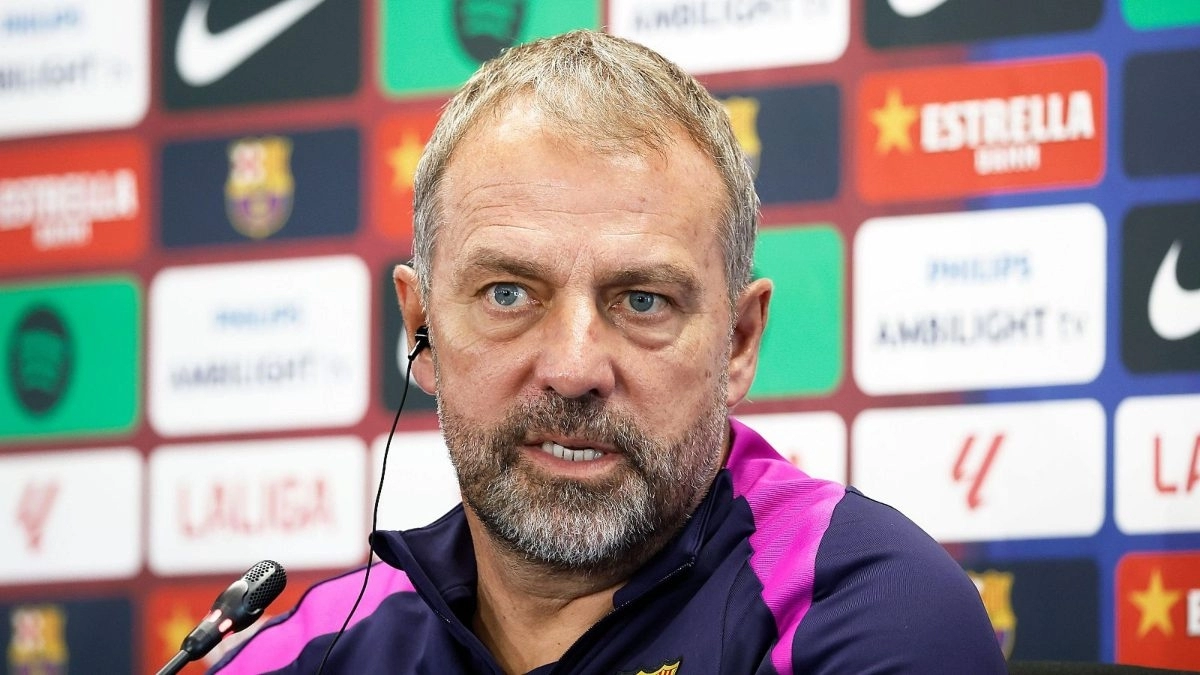
The team led by Hansi Flick resolved the game with an outstanding first half. In just 45 minutes, Barcelona scored four goals and left Athletic overwhelmed in intensity, pace, and precision. High pressure, quick circulation, and aggressive offense were the hallmarks of a recognizable and well-worked Barça.
The victory earns the team a spot in the final against the winner of the match between Atletico Madrid and Real Madrid, but it also solidifies Flick's role as the architect of a team increasingly reliable in big moments. The German coach has provided the group with a clear structure and constant competitiveness, even evident with significant rotations in the starting eleven.
In this context, the match confirmed that Barcelona does not solely depend on its most high-profile players. Squad depth and trust in the youth are yielding visible results in the most demanding situations.
Roony Bardghji seizes his opportunity
One of the focal points of the match was Roony Bardghji. The Swedish forward started in place of Lamine Yamal and responded with a very mature performance. Bardghji, far from being intimidated by the stage, displayed personality, tactical discipline, and a notable understanding of the collective game.
It was not a game of individual showmanship but of correct decisions. He knew when to dribble, when to combine, and how to intelligently occupy spaces. His performance confirmed his readiness to compete at the highest level and that his presence fits well in a team with lofty ambitions.
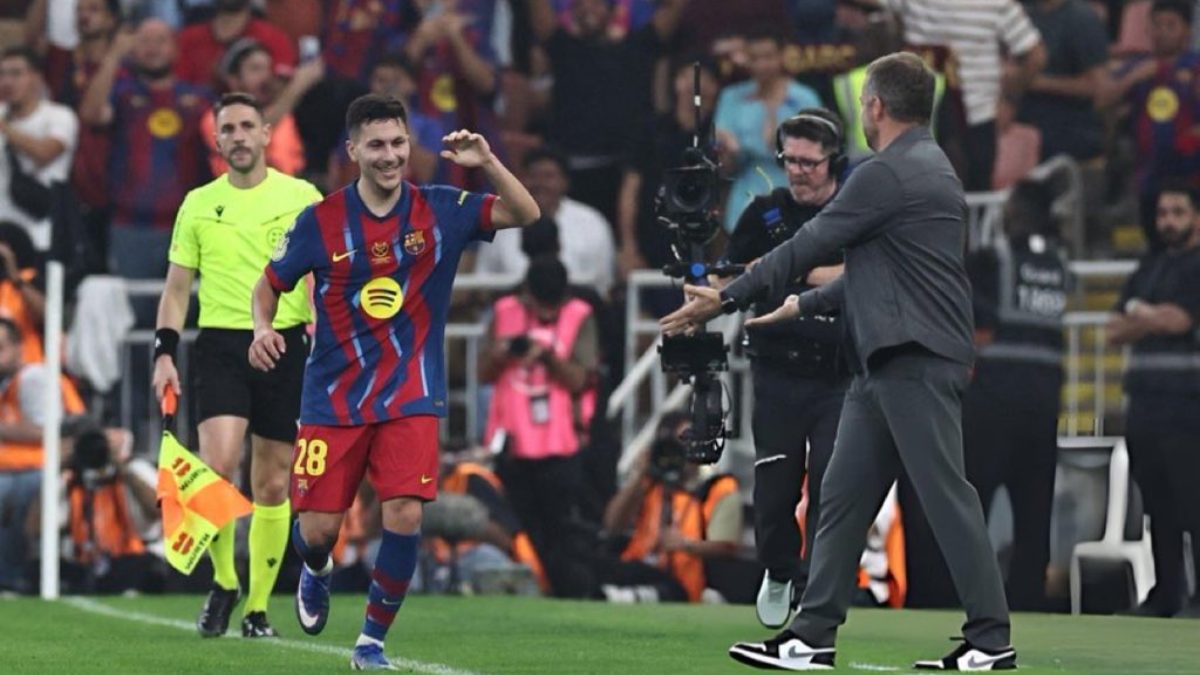
This match validates the club's decision to halt his departure in the winter transfer market. Flick believes that Bardghji will be crucial in the latter part of the season, and the Swede has begun to repay that trust on the field. His performance against Athletic was not incidental but the result of a sustained growth process.
The dilemma of minutes and talent management
The big challenge for the coaching staff now lies in managing the attack. Lamine Yamal is currently an irreplaceable piece, his impact, imbalance, and consistency secure him a starting spot in crucial games. However, Bardghji's display demands a rethink of the distribution of minutes.
Modern football requires smart rotations and fair performance management. Ignoring the Swede's contribution would hinder a progression that could be very valuable for the team. Flick faces a positive yet complex dilemma: how to give space to Bardghji without altering Yamal's role or destabilizing the system.
There are solutions: occasional tactical changes, increased participation from the bench, or even coexistence in certain match situations. The key will be to convey coherence and meritocracy, values that the team clearly perceives.
Barcelona not only won a semifinal but also gained alternatives, depth, and certainties. Roony Bardghji's emergence widens the offensive range and reinforces the notion that the project has a present and future vision. Now, the responsibility lies with the bench. Handling such situations well can make the difference between a competitive team and a truly dominant one.
The final is just around the corner, and the message is crystal clear. Bardghji has staked his claim with football and personality. The next step will rely on the coaching staff's ability to transform that emerging talent into a real and sustained asset within a Barcelona that is setting its sights on major goals.
This news is an automatic translation. You can read the original news, Problemas para Hansi Flick en la delantera
-
 17 Aug 2026 | 09:00The Beach Bar Drops the BOMB: Gyokeres to Barcelona
 -
 16 Aug 2026 | 21:00The kings of negotiations: RB Leipzig's most expensive sales
 -
 16 Aug 2026 | 22:00The competitors of Joan Garcia
 -
 16 Aug 2026 | 16:00The Premier League offers €55m for one of Villarreal's stars
 -
 16 Aug 2026 | 15:00Dépor shows interest in Oscar Gloukh
 -
 16 Aug 2026 | 20:00The 5 best signings of the Simeone era at Atlético Madrid
 -
 16 Aug 2026 | 20:00Fabrizio Romano: Barcelona Completes the Signing of Rodri
 -
 17 Aug 2026 | 09:00Cancelo breaks up with Al Hilal and is already traveling to Barcelona
 -
 16 Aug 2026 | 23:00Real Madrid loaned players who became legends
 -
 16 Aug 2026 | 17:00Atlético Madrid Joins Fight with FC Barcelona for Ounahi
 -
 16 Aug 2026 | 14:00Villarreal continues to insist on a €12M forward
 -
 16 Aug 2026 | 19:00The 5 failed signings of Barcelona this summer
 -
 16 Aug 2026 | 21:00This is how much Barcelona will pay for Rodri